
When “real-time” feels like control
The maritime industry has made significant progress in improving visibility. Updates arrive faster, communication channels are more direct, and information is more accessible than ever before. Despite this, many teams still operate in a reactive mode.
They respond to delays, adjust to changes, and coordinate stakeholders as situations evolve. Decisions are made quickly, often under pressure, and based on the best information available at that moment. This creates the impression of control. However, real-time visibility only shows what is happening now; it does not provide clarity on what will happen next. As a result, decisions are frequently made after the impact of an event has already started to materialise.
When real-time becomes too late
In port operations, timing is critical. A small delay in arrival can affect berth availability, a missed window can lead to waiting time, and a change in cargo readiness can disrupt the entire schedule. These events rarely occur in isolation, but instead trigger a chain reaction across agents, terminals, vessels, and office teams.
By the time a delay becomes visible, the downstream impact is often already set in motion. Berth conflicts have formed, resources have been allocated elsewhere, and alternatives become more limited. At that point, the focus shifts from optimisation to mitigation. Teams are no longer preventing issues; they are managing the consequences.
The cost of constant firefighting
Operating in a reactive mode has consequences that extend beyond individual port calls. Over time, it leads to increased waiting times, longer port stays, and higher exposure to demurrage and inefficiencies. At the same time, operations teams remain under continuous pressure, managing exceptions instead of improving processes.
More importantly, this way of working limits the ability to improve structurally. When every situation is handled in the moment, there is little opportunity to identify patterns, anticipate recurring issues, or make proactive adjustments. Firefighting keeps operations running, but it does not make them better.
“In many teams, being busy is confused with being in control. But if you’re constantly reacting, you’re always one step behind the operation itself.”
— Gep Navest, co-founder responsible for commercial and operational strategy
The missing layer: forward visibility
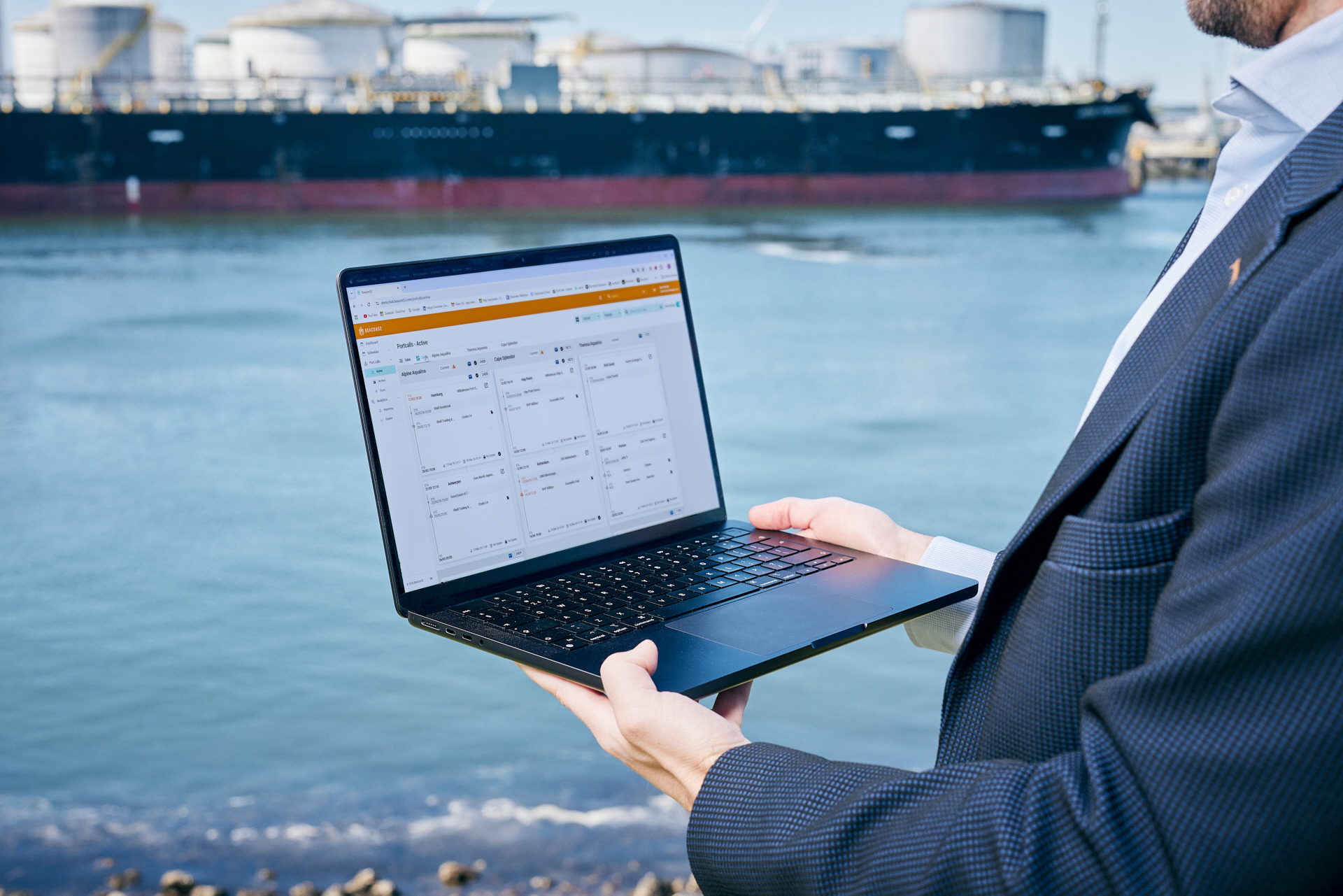
What is often missing in port operations is not data, but perspective. Operators already have access to large volumes of information, including ETAs, agent updates, terminal schedules, and historical performance data. The challenge lies in turning that information into something actionable before disruptions occur.
Forward visibility means understanding not just what is happening, but what is likely to happen next by learning from how similar situations have unfolded before.
“You can’t anticipate what you don’t capture. Without structured data from past port calls, every decision starts from scratch instead of building on what you’ve already learned.”
— Mico Milojevic, co-founder responsible for technology at Beacon52
It involves identifying potential issues earlier, based on better visibility and context, such as an ETA that is starting to drift, a berth window that may become unavailable, or recurring delays in a specific port or terminal.
What makes this particularly challenging is that these signals rarely become visible in isolation. They only start to form patterns when viewed across multiple port calls, vessels, and regions over time. Without a structured way of capturing and connecting that data, organisations remain dependent on individual experience and manual interpretation. Insights stay local, learning is inconsistent, and the same situations tend to repeat without being systematically addressed.
From reacting to anticipating
A shift is emerging among operators who are moving beyond real-time coordination towards a more anticipatory way of working. Instead of reacting to events as they happen, they identify potential issues earlier, based on better visibility and context, and act while options are still available.
This changes the nature of decision-making. Communication becomes proactive rather than reactive, adjustments are made while flexibility still exists, and coordination happens with context rather than urgency. Instead of constantly catching up with reality, teams begin to stay ahead of it.
A different standard for port call management
Shipping will always involve uncertainty. Weather conditions, port congestion, and operational variability cannot be eliminated. However, operating in a constant state of reaction does not have to be the standard.
Organisations that introduce more structure, connect their data, and create visibility across the full port call lifecycle are better positioned to move from reacting to anticipating. They achieve more than efficiency. They create predictability in an inherently unpredictable environment, reduce pressure on their teams, and make decisions with greater confidence.
Over time, this also enables something more fundamental: the ability to measure, compare, and improve performance across ports, agents, and voyages. Patterns become visible, decisions become data-driven, and operational improvements become repeatable rather than incidental.
In that context, real-time visibility is no longer the end goal. It becomes the foundation for something more valuable: the ability to act earlier, while options are still available.