
How technology and human expertise come together in a service-driven approach
When people think about AI, they often imagine futuristic systems replacing human work. At Beacon52, the reality is very different. Here, AI is not about removing people from port operations. It’s about helping them work smarter, faster, and with more confidence in an industry that still relies heavily on fragmented workflows, manual processes, spreadsheets, and endless streams of emails.
For Mark Reyes, AI Specialist at Beacon52, that human-first philosophy is exactly what made the company stand out. “Everyone nowadays wants to say they are AI-powered,” Mark explains. “But at Beacon52, the focus is not on using AI as a label. The focus is on using it where it genuinely solves problems and creates value for clients.”
Originally from Lima, Peru, Mark’s path into maritime technology was anything but traditional. While studying Economics and Business Economics at Erasmus University Rotterdam, he began teaching himself Python, statistics, and machine learning during his free time. What started as curiosity quickly evolved into a passion for AI and applied technology.
“I realised AI is essentially math, statistics, and programming coming together,” he says. “And once I started learning more, I became fascinated by how technology could solve real operational problems.”
That curiosity eventually led him to Beacon52, a maritime operations platform focused on improving port call management, operational visibility, and DA management through smarter workflows and data-driven solutions.
Bringing structure to fragmented maritime operations
One of the first things that struck Mark during his conversations with Beacon52’s founders was how much of the maritime industry still depends on manual processes.
“Many operations are still fragmented,” he explains. “Different formats, documents, workflows, and systems all have to work together, while often speaking completely different operational languages.”
For companies managing hundreds or even thousands of global port calls every year, that complexity creates enormous operational pressure. And according to Mark, that’s where AI-driven maritime and shipping operations software can make a real difference.
“Most people think AI is just building complicated models,” he says. “In reality, a huge part of the work is making sure the data is correct, structured, and reliable. Without that, AI cannot help you.”
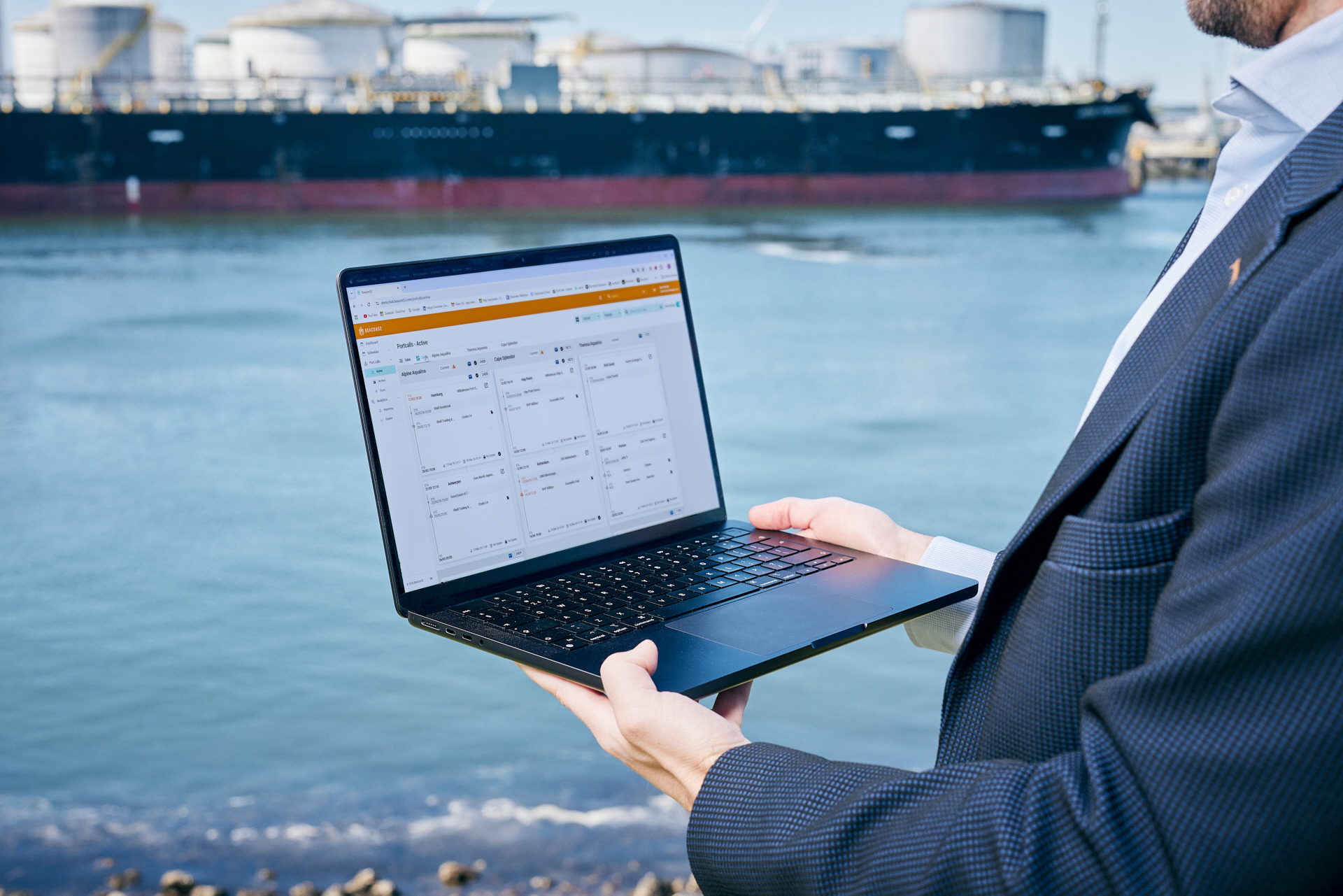
Today, Mark works closely on improving how operational data flows through Beacon52’s port call management software and broader maritime operations platform. The goal is not simply to collect information, but to turn fragmented operational data into actionable intelligence.
“We continuously work toward making Beacon52 part of the decision-making process,” Mark explains. “Not just another administrative or bookkeeping tool, but a platform that genuinely helps people make better operational decisions.”
We continuously work toward making Beacon52 part of the decision-making process.
AI in maritime and shipping operations
Within port call management and maritime operations, operators constantly deal with pressure, uncertainty, and changing conditions. According to Mark, technology should remove friction from those processes, not add more complexity.
“We want AI to take the heavy load,” he explains. “The repetitive tasks, the manual checking, the administrative workload. That allows operators and agents to focus on what really matters.”
That philosophy plays an important role in how Beacon52 approaches AI development within its port call system and shipping workflow software. Rather than forcing clients into rigid new ways of working, the team first studies how customers currently operate.
“We don’t want agents or operators to completely change their workflows overnight,” Mark says. “We first try to understand how they work today and then build bridges between their reality and the technology.”
A service-driven approach to maritime operations software
That service-driven mindset is deeply embedded within Beacon52’s culture. Whether it’s port call management, disbursement account management, or maritime cost control software, the company continuously works alongside clients to improve operational processes step by step.
Equally important is staying close to customers and understanding the local realities they deal with every day. Beacon52 strongly believes that being accessible, easy to reach, and locally present where it matters creates stronger collaboration and better operational support.
“When a client tells us something is too tedious or time-consuming, we don’t just acknowledge it,” Mark explains. “We immediately start thinking: how can we improve this for them?”
Why human expertise still matters in port call management
Despite his passion for AI, Mark is convinced that technology alone will never replace operational expertise within shipping and port operations.
“There will always be situations where human experience matters,” he says. “AI can help predict, automate, and optimise, but operators and agents understand the operational reality in a way machines never fully will.”
To explain this, Mark uses a simple but powerful metaphor. “If you place a ship on one side of a map and the destination on the other, AI might assume the shortest route is a straight line,” he says. “But because the earth is curved, the best route is actually different. You only discover that by understanding reality.”
That philosophy strongly influences how Beacon52 develops its maritime operations software and port operations platform.
“If we don’t listen to operators, agents, and clients, we risk building perfect theoretical solutions that don’t work in practice,” Mark explains. “We would basically be drawing straight lines on a curved map.”
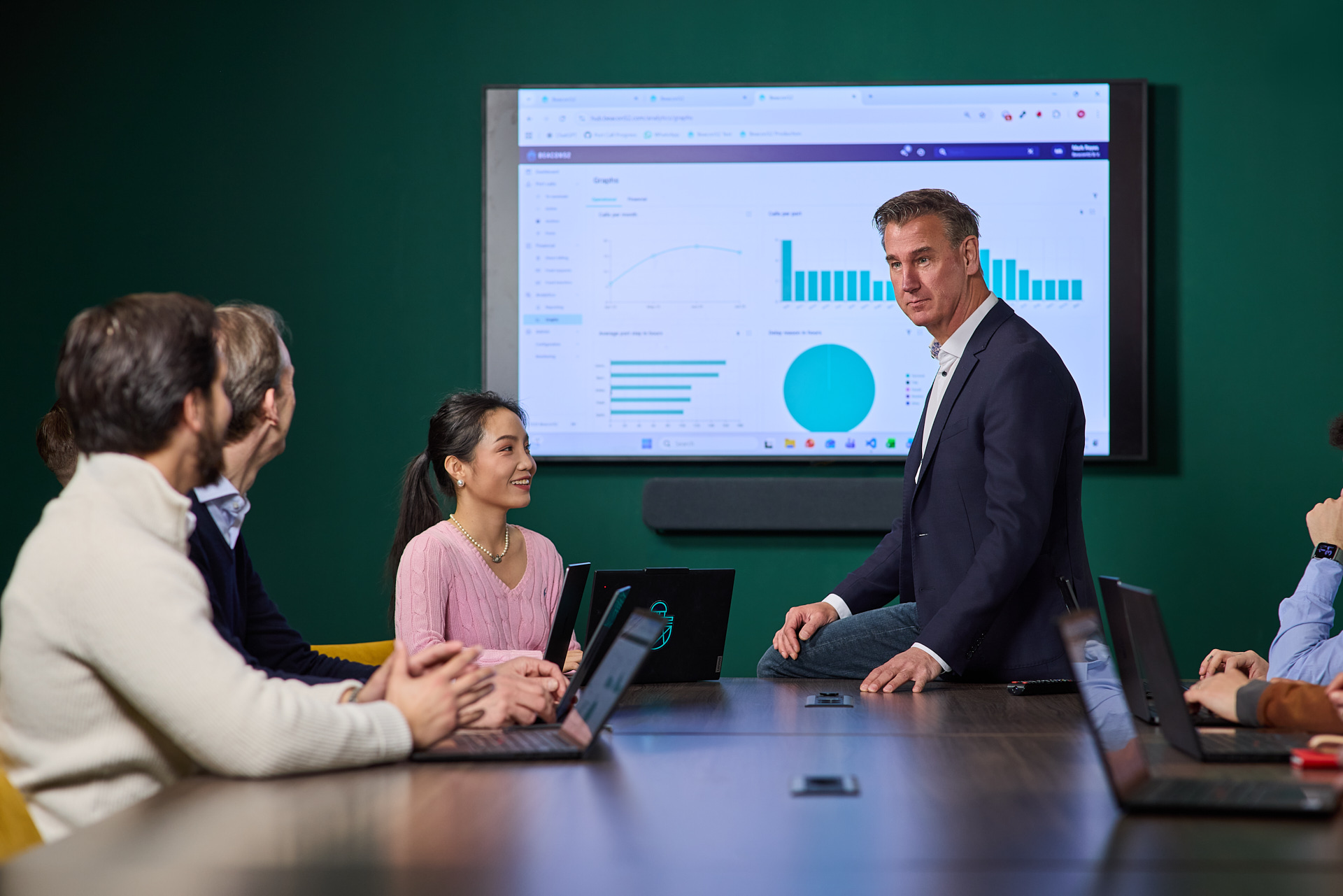
Instead, Beacon52 positions itself as a service-driven technology partner that combines automation with operational expertise. The company’s AI specialists, developers, commercial teams, and maritime experts continuously collaborate with clients to improve workflows, optimize port call operations, and strengthen decision-making.
“Trust is earned,” Mark says. “We don’t just want to promise improvements. We want clients to actually experience the value.”
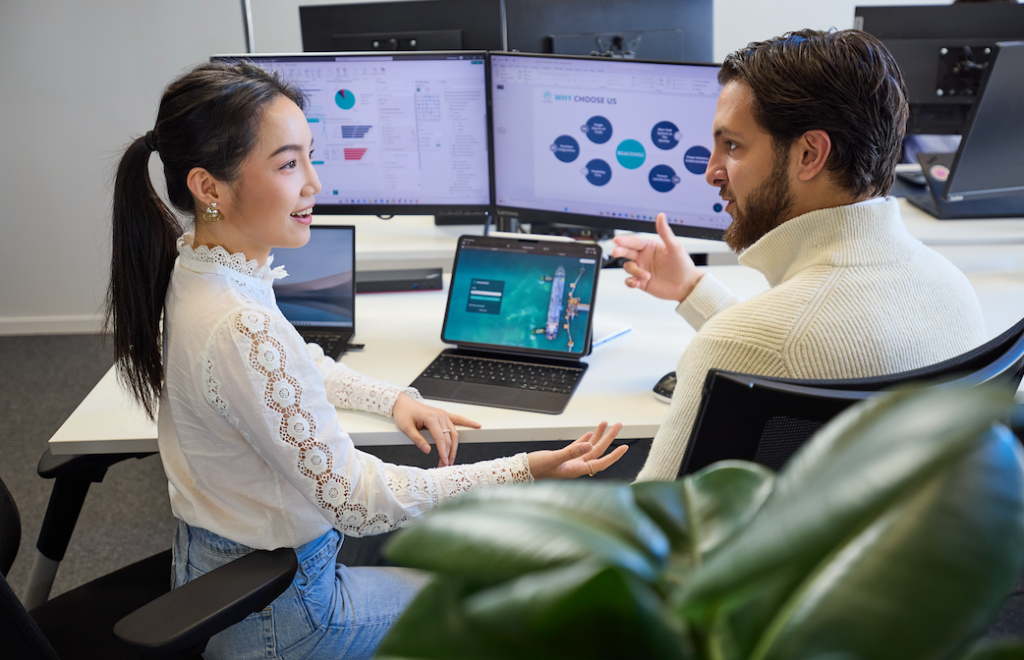
Mark collaborating with AI team colleague Zhengqing Liu
Building the future of port call management software
According to Mark, the maritime industry is only at the beginning of its digital transformation.
He believes the future lies in smarter port call management software, automated DA management software, cleaner operational data, and predictive AI models that help operators make better decisions faster.
“The more structured and reliable the data becomes, the more we can improve operations,” he explains. “That’s when you can start predicting delays, optimising timings, improving fuel usage, or helping companies operate more efficiently.”
But even as AI evolves, Beacon52’s approach remains grounded in collaboration and human partnership. “We don’t want to replace people,” Mark says. “We want to build solutions together with them.”
That balance between technology, service, and operational understanding is exactly what defines Beacon52’s vision for the future of maritime operations.
We don’t want to replace people. We want to build solutions together with them.
More than technology
Outside the office, Mark’s interests reveal another side of his personality. He plays piano and guitar, produces music, reads classical literature and philosophy, and enjoys cooking. Especially a good steak.
In fact, colleagues know him as much for his positive energy and conversations about food as for his work in AI. “I always try to come into the office with a smile,” he says.
That combination of curiosity, ambition, humility, and human connection reflects the broader culture at Beacon52 itself: highly driven people working together toward a common goal.
“What motivates me most,” Mark explains, “is seeing everybody pushing in the same direction. Everyone genuinely wants to improve things for clients.”
And ultimately, that’s what Beacon52 aims to deliver through its shipping operations software, port call management software, and maritime operations platform: not just more automation, but more clarity, more control, more confidence, and better-informed decisions for everyone involved in the port call process.
“We want people using Beacon52 to have a seamless experience,” Mark says. “So they can spend less time on repetitive manual work and more time focusing on strategic thinking, collaboration, and the human side of operations that truly creates value.”