
Multi-party collaboration
One workflow for every stakeholder
Replace email chaos with structured collaboration across ships, agents, terminals, and offices, all working from one shared operational truth.
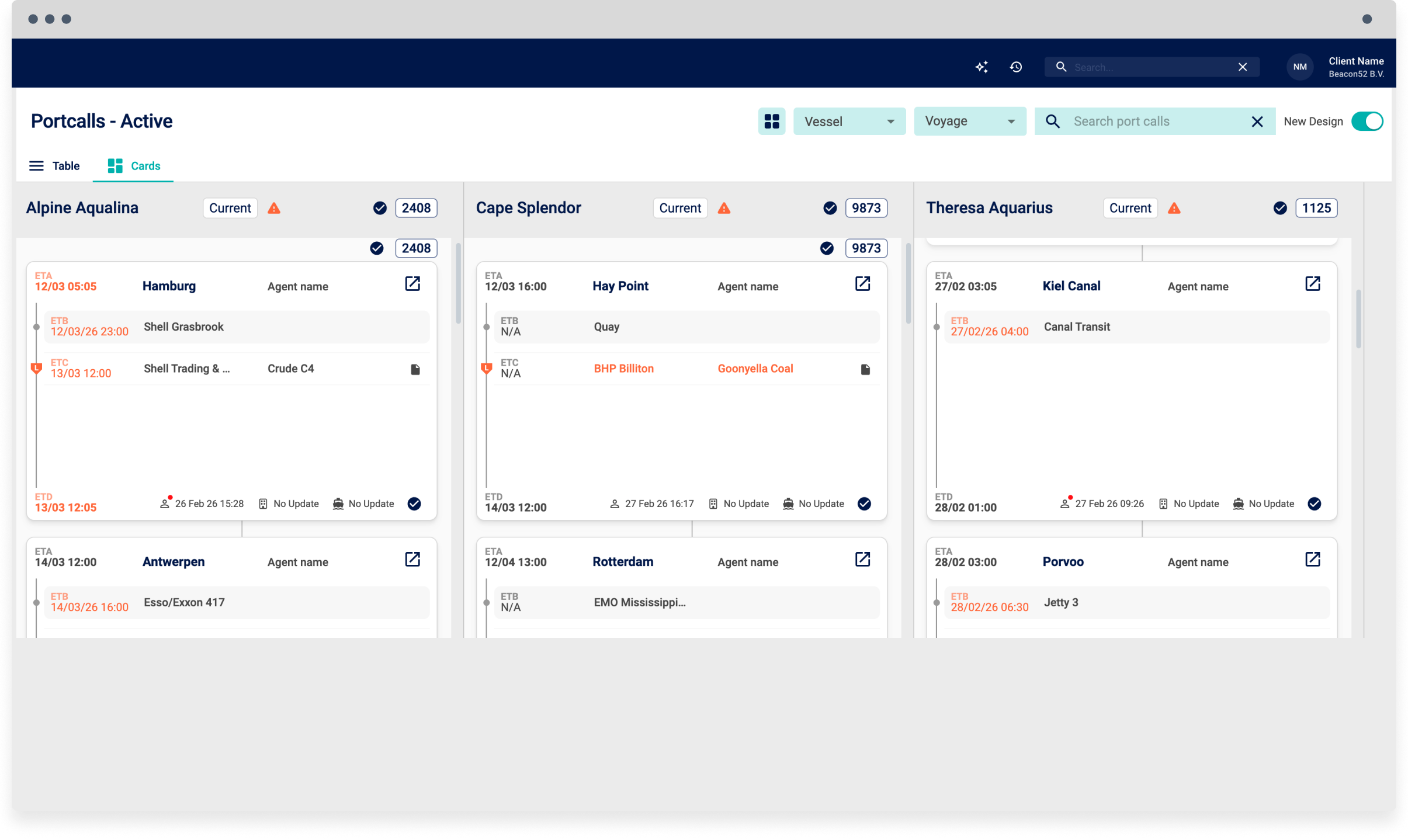
Platform overview / Multi-party collaboration
The coordination challenge behind every port call
Every port call involves multiple parties, often spread across organisations and time zones. Yet coordination still happens through fragmented email threads, leading to conflicting updates, unclear responsibilities, and avoidable mistakes.
You are left firefighting instead of managing.
The collaboration problems we solve
Our Multi-party Collaboration feature addresses shared industry challenges:
- Email overload and unstructured communication.
- Conflicting updates from agents, terminals, and ships.
- No shared operational timeline or task ownership.
- Complex collaboration across pools, JVs, and chartered vessels.
- High risk of miscommunication and disputes.

Platform Features
One environment. One version of the truth.
Beacon52 brings all stakeholders into a single, secure workspace. Updates are shared in real time, responsibilities are clear, and every action is logged. Collaboration becomes predictable, transparent, and calm. Even in complex operational setups.

Shared operational timeline
All updates, milestones, and changes visible to authorised parties in real time.

Structured communication
Tasks and updates replace unstructured email chains.

Scalable collaboration
Supports multi-fleet, JV, pool, and third-party vessel setups.
Role-based access & control
Each stakeholder sees and contributes only what is relevant to them.
Full audit trail
Every action and update is logged and traceable.
The numbers that make the difference
We deliver measurable collaboration gains:
Communication efficiency
40-60%
reduction in email volume
Operational accuracy
60–70%
fewer miscommunication incidents
Organisational alignment
Why Beacon52
Beacon52 turns collaboration from a source of risk into a source of control, aligning all parties around one shared operational reality.
Advantages
- One shared operational truth
- Clear accountability and task ownership
- Reduced coordination risk in complex setups
- Traceable communication
- Faster alignment during disruptions
- Calm coordination under pressure